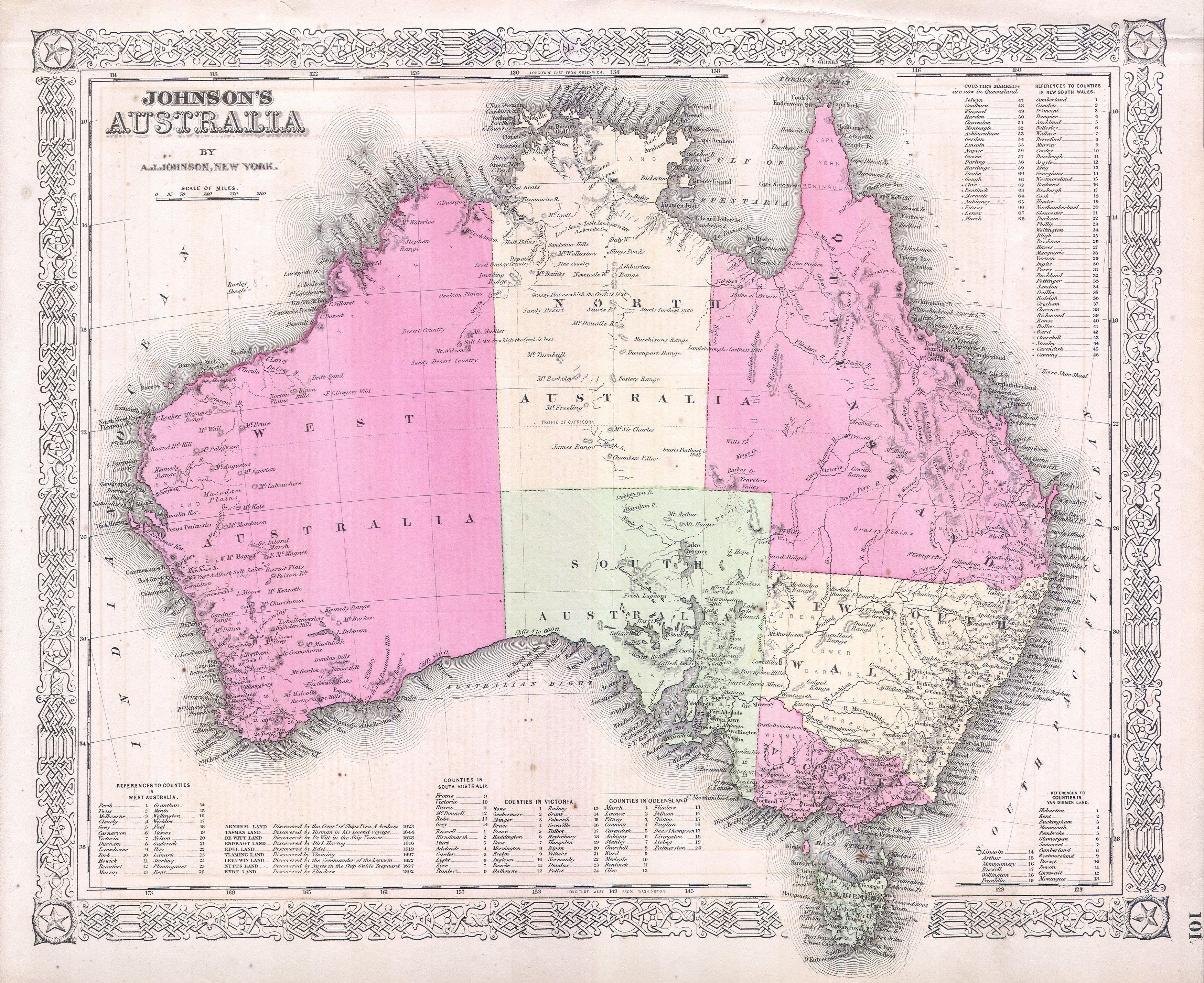
In 1969, a small group of sisters embarked on a bold new mission in Australia. At the very moment when the Institute was expanding its works across the globe, this unique mission took place against the backdrop of the Second Vatican Council, which called on religious congregations to rethink their missions. It was in this spirit that the sisters, after much soul-searching, discovered their new apostolate amongst children and, later, the Aboriginal people.
From Malaysia to Australia
After the Second World War, the British presence in Malaysia gradually drew to a close, against a backdrop of racial tensions and stirrings of independence. The sisters, many of whom were European, feared being expelled and sought refuge. Australia presented itself as the natural choice: just a few hours’ flight away, it offered an Anglo-Saxon way of life and reassuring stability. As early as 1950, a plan began to take shape, but ultimately came to nothing. It was not until the late 1960s, amidst a climate of racial tensions and riots in Malaysia, that the idea was seriously revisited. In 1969, Mothers John Desmond and Pauline Legrix met the Archbishop of Melbourne, who confirmed the need for sisters on the ground. The foundation could finally be established.
Irish in Melbourne
Five sisters – Mother Vincent Mac Sweeney, Sisters Henry Golden, Henriette Hennesy, Agnes O’Connor and Elizabeth McWey – settled in Melbourne, in the Vermont neighbourhood: this was the Institute’s first Australian community. All Irish, they were part of a long-standing tradition: Irish clergy had been present in Australia since the second half of the 19th century. Whilst their convent was being built, they were housed by the Josephite Sisters, and immediately took charge of the administration and some of the teaching at St Timothy’s School.
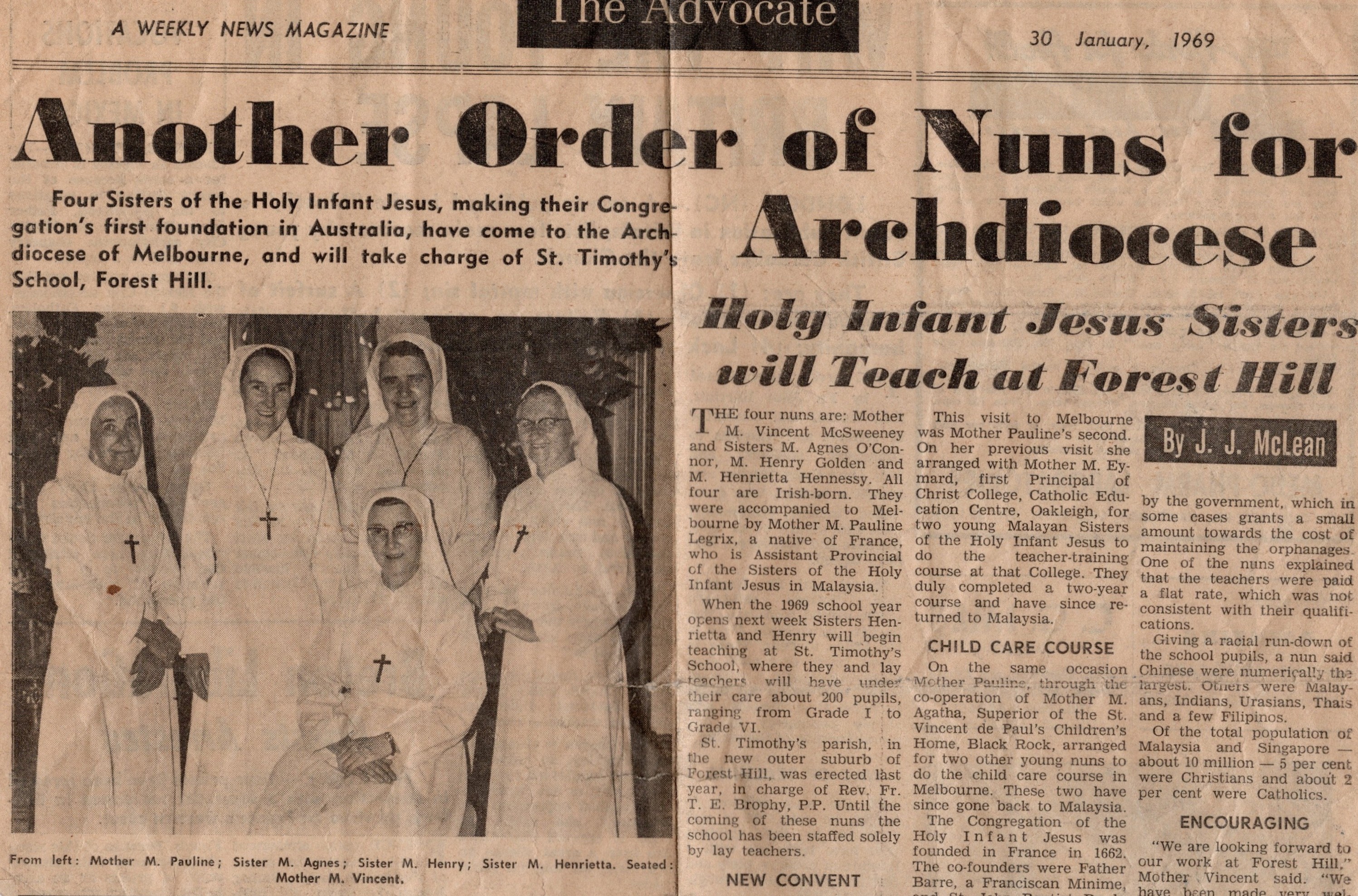 Excerpt from “The Advocate” newspaper on the sisters' arrival in the Archdiocese of Melbourne (1969, IJS archives, 11M1/3)
The following year, two new arrivals, Sisters Gertrude Lalor and Mary O’Connell, joined them to teach at a secondary school in a Melbourne suburb. At the same time, the Mission’s status became clearer: it came directly under the responsibility of the General Council.
A second community and new missions
|
In 1972, a second community opened in Chadstone, still in Melbourne. The sisters there had a plan: to open a hall of residence for female students. New sisters arrived to strengthen the mission — Mother John Desmond, Sisters Hannah Murray, Declan McSweeney and Fabian Butler — bringing the total number of sisters in the Australian mission to fourteen. The hall of residence, named ‘Naranga’ — meaning ‘open’ in the Aboriginal language — was inaugurated during a visit by the Superior General, Mother Maria del Rosario Brandoly, accompanied by her counsellor, in 1972.
Twelve rooms are available, and the residents include former pupils of the sisters from Malaysia and Singapore; the sisters strive to create a warm and friendly atmosphere there. Having reached full capacity by 1974, the hostel needed to be extended.
|
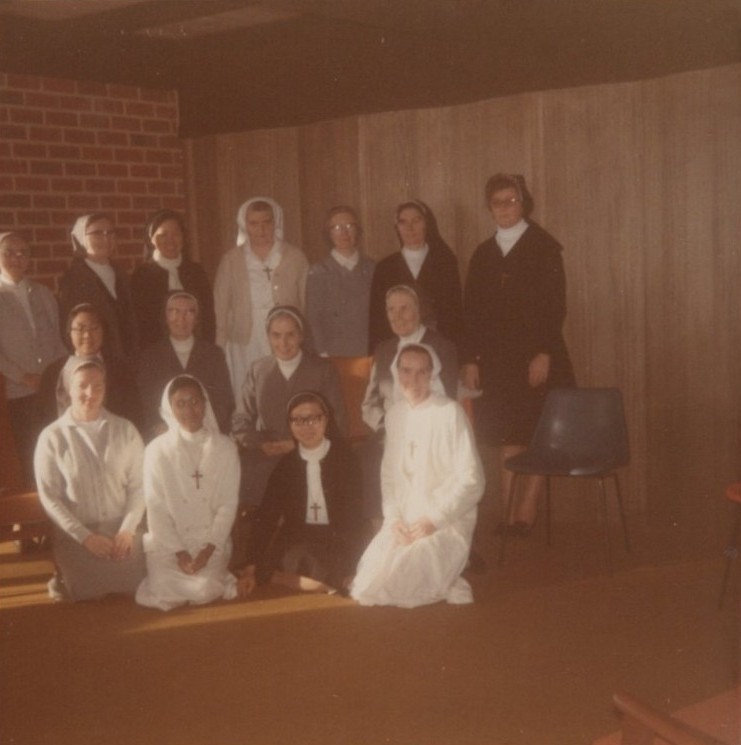
The sisters of Australia with the Superior General Mother and her counsellor (1972, IJS archives, 11M1/3)
|
Around this work, activities continued unabated: catechism classes, visits to migrants, pastoral care for the elderly or the sick… In 1973, the sisters also helped organise the 40th International Eucharistic Congress, held in Melbourne.
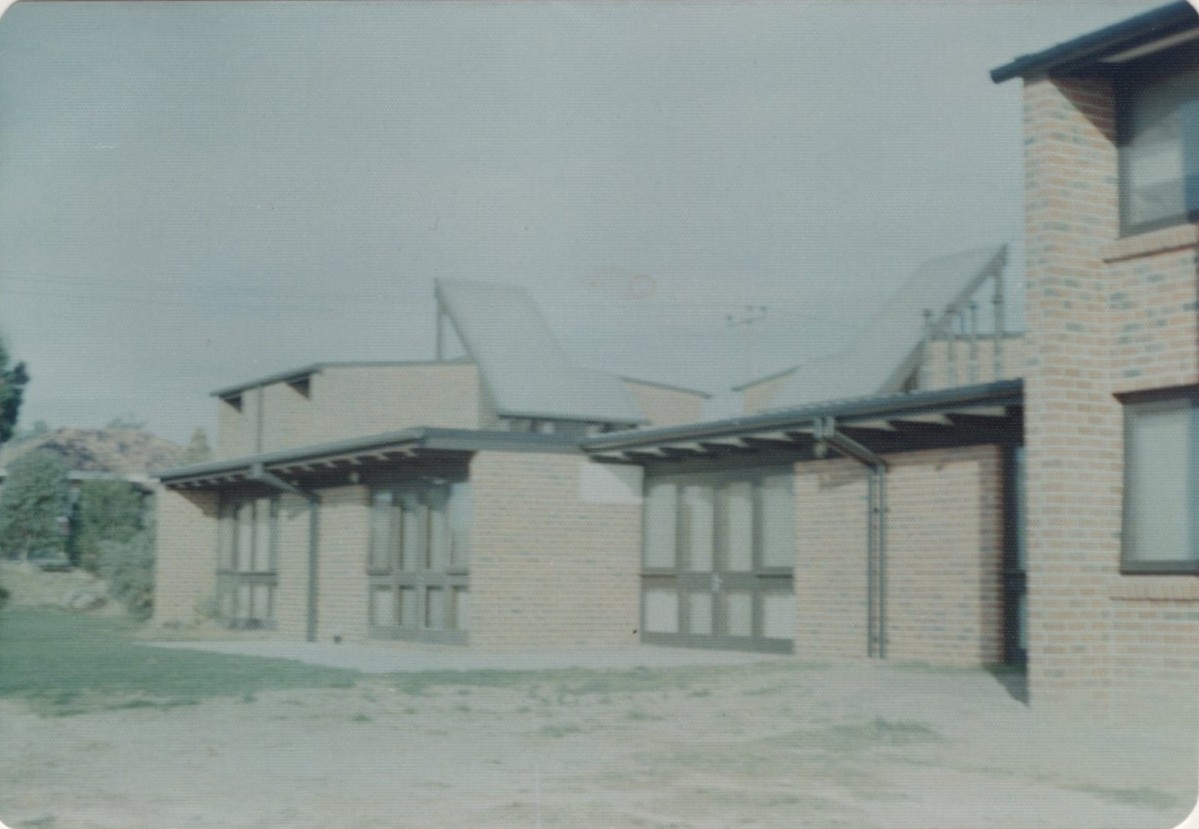 Sisters' house in Melbourne-Chadstone and "Naranga" residence (1975, IJS archives, 11M1/2)
Beagle Bay and the Aboriginal People
In 1975, a visit by the Superior General led the sisters to reflect deeply on their religious life and their missions in Australia — a country which, since 1976, was no longer considered a mission territory. The sisters therefore chose to commit themselves to working with the Aboriginal people. An opportunity arose in the Diocese of Broome, where two sisters were called upon to teach at an Aboriginal school in the Beagle Bay area. Hannah Murray and Mary de Courcy MacDonnell responded to this call; an agreement was signed for 1977. They prepared themselves by studying Aboriginal anthropology, culture and way of life. In 1978, another Aboriginal community, in Lombadina, also expressed a wish to welcome teaching sisters: two Irish sisters, Sisters Anne O’Neill and Anne Marie Ryan, were sent there.
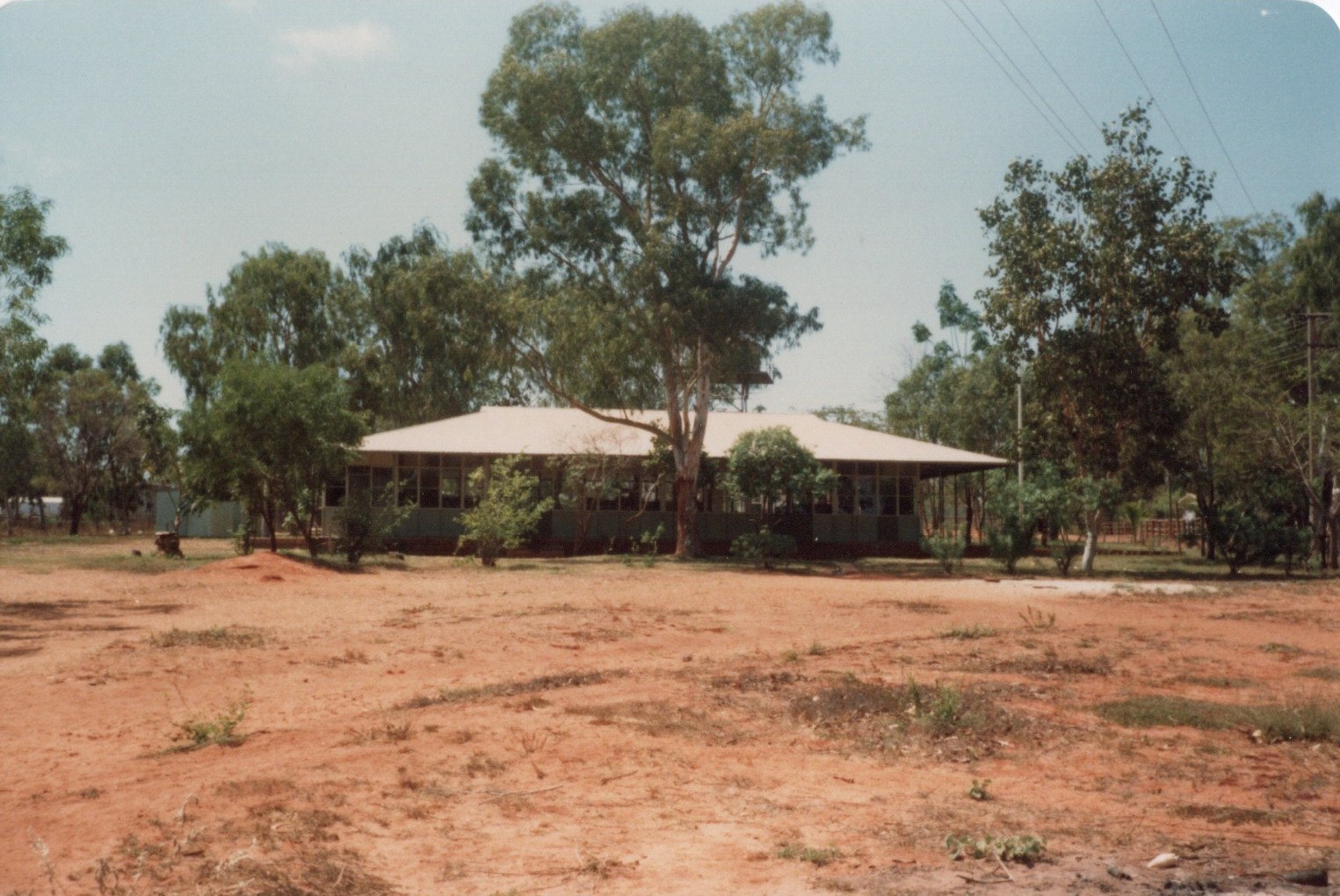 School of Lombadina (1970-1980's, IJS archives, 11M1/3)
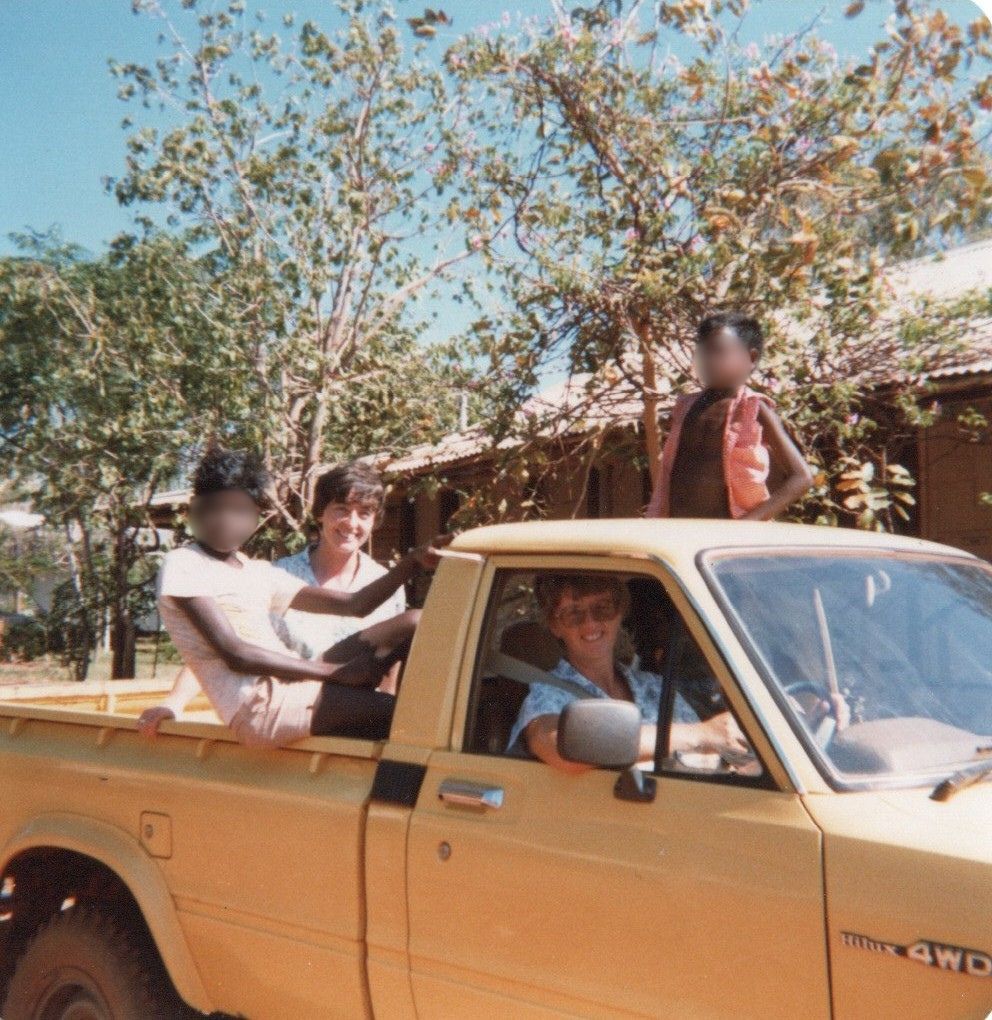 Two sisters with Aboriginal children (1970-1980's, IJS archives, 11M1/3)
From Melbourne to Perth
|
Faced with ageing communities and a lack of new vocations in Australia, the sisters were once again forced to rethink their missions – and they came to the same conclusion: their mission must focus on the Aboriginal people. In agreement with the General Council, they decided in 1979 to leave Melbourne.
They withdrew from the schools, the students’ hall of residence was sold, and several sisters returned to Ireland. The others set off for Perth, three thousand kilometres away, and settled in Lockridge, a deprived neighbourhood where they devoted themselves to working with the Aboriginal people.
|
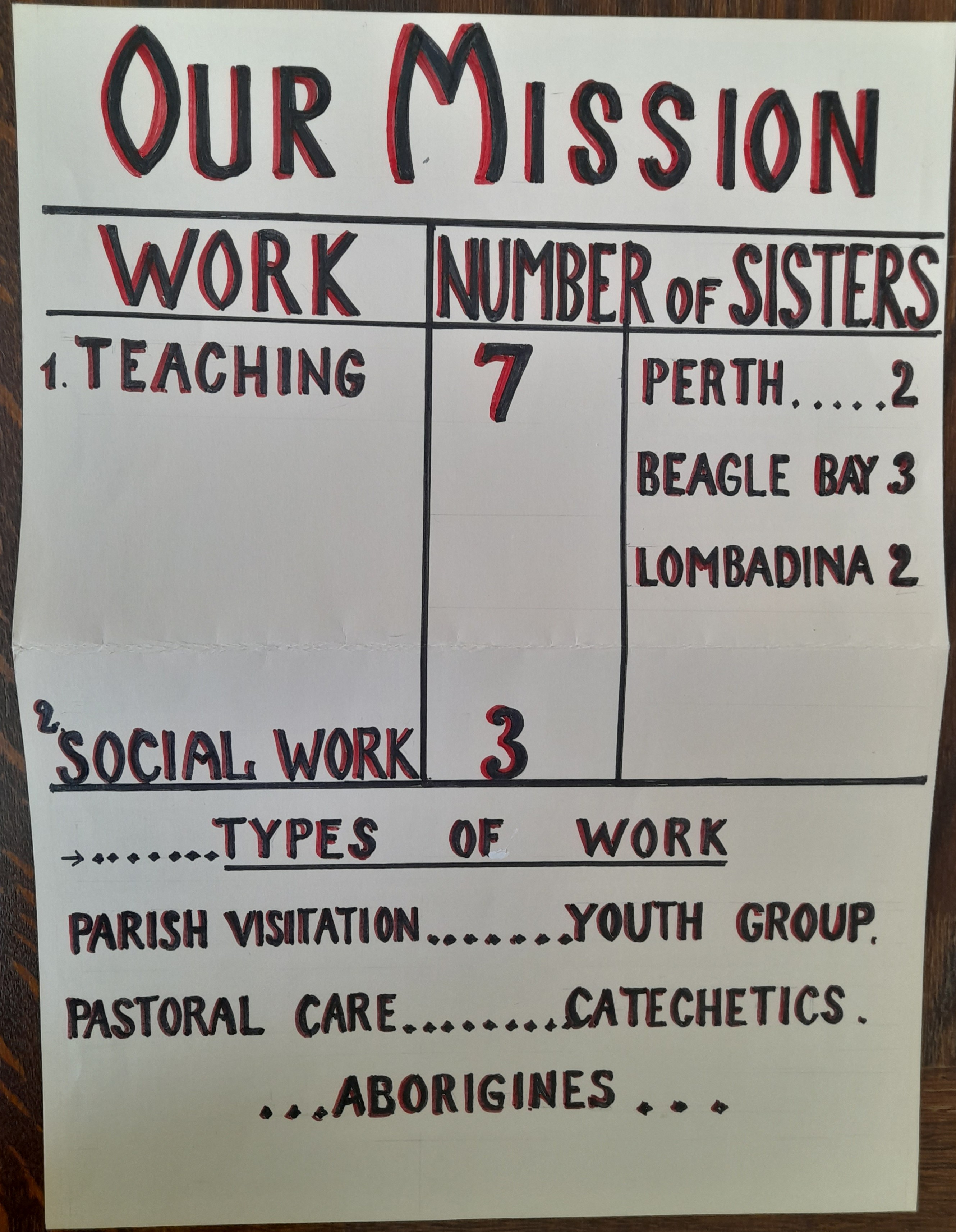
Board summarizing the sisters' missions in Australia (1980's, IJS archives, 11M1/2)
|
In 1981, the Lockridge team was strengthened and comprised seven sisters, including three new arrivals: Sisters Francis de Salles Götte, Dorothy O’Keeffe and Mary O’Connell. Mother John Desmond left Australia in 1982, whilst Sisters Ita Noonan and Margaret Murphy arrived in 1983 and 1984 respectively. In Lockridge, the sisters were actively involved with the Church and the local communities: home visits, adult education, spiritual guidance… Three of them – Sisters Gertrude, Mary and Ita – taught in Catholic schools in Perth and its suburbs, whilst Sister Fabian became involved with the Society of Saint Vincent de Paul.
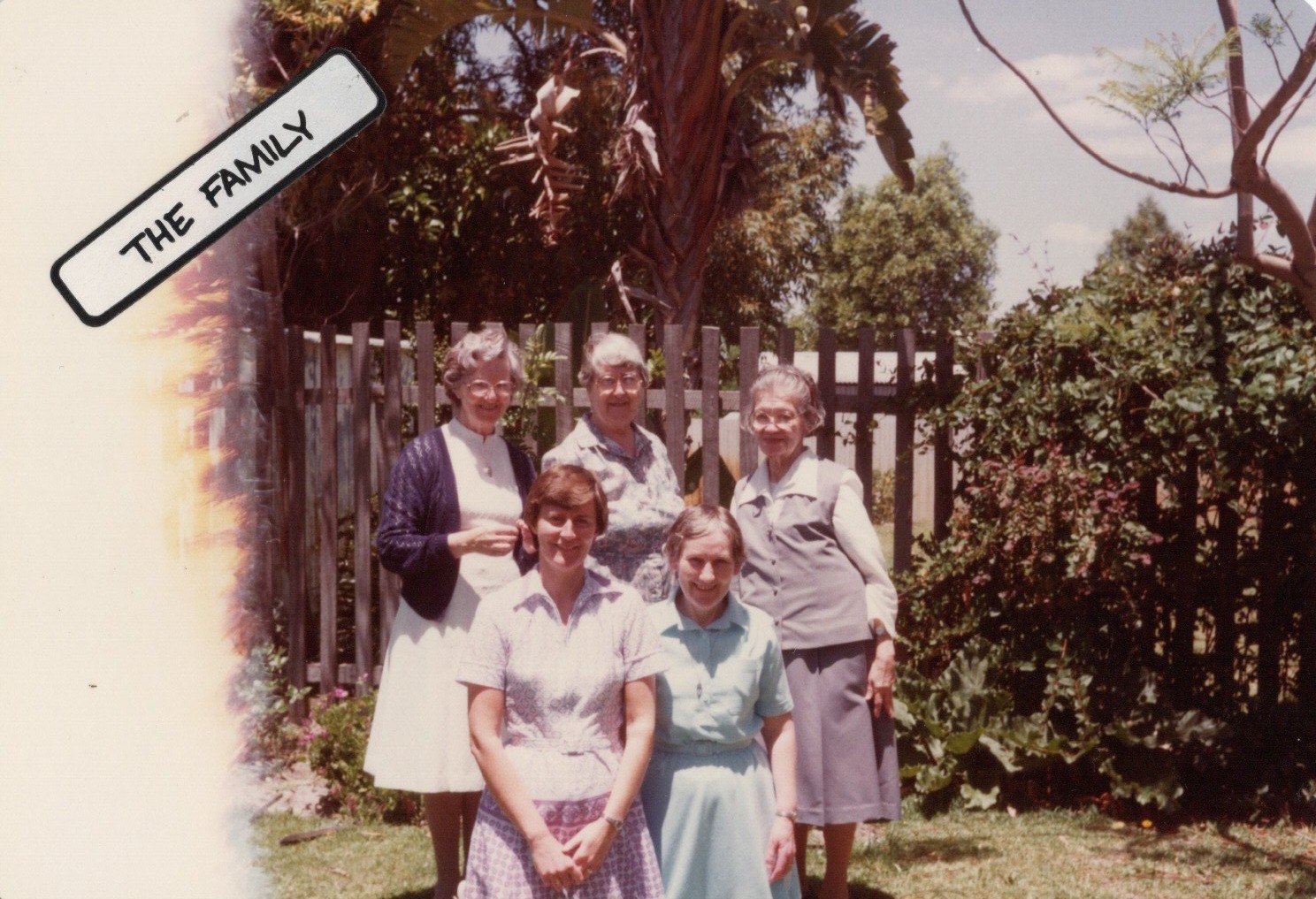 Sisters of the community of Lockridge (vers 1981-1985, archives des soeurs de l'EJNB, 11M1/3)
The end of twenty years in Australia
|
Despite all their efforts, the sisters no longer had the necessary numbers to carry on. Several sisters began to leave Australia. The withdrawal from the Aboriginal schools at Beagle Bay and Lombadina was formalised in 1985 and took effect the following year. By 1986, only five sisters remained in Australia: the mission had to close, though not without receiving the archdiocese’s recognition. The sisters then dispersed to Ireland, England and Malaysia, where each continued her mission.
Twenty years after this bold foundation, the Australian chapter came to a close – but their commitment to the Aboriginal people has left its mark on the history of the Institute.
|
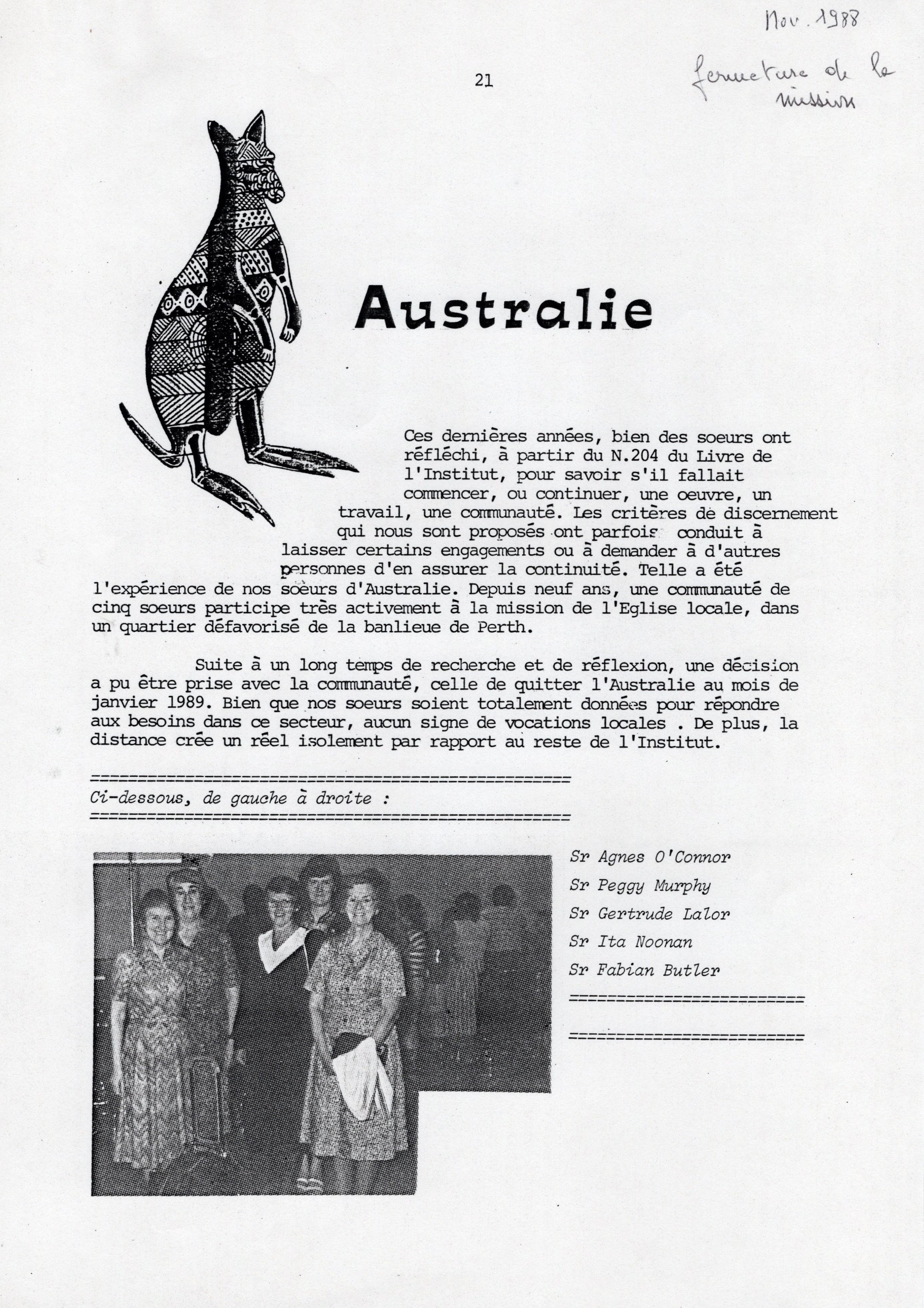
Excerpt from Sint Unum on the closure of the mission in Australia (1988, IJS archives, 11M1/2)
|
Fore more information...
This article is an abridged version of the virtual exhibition of the same name (in french only).
Written by Anaëlle Herrewyn, IJS archivist